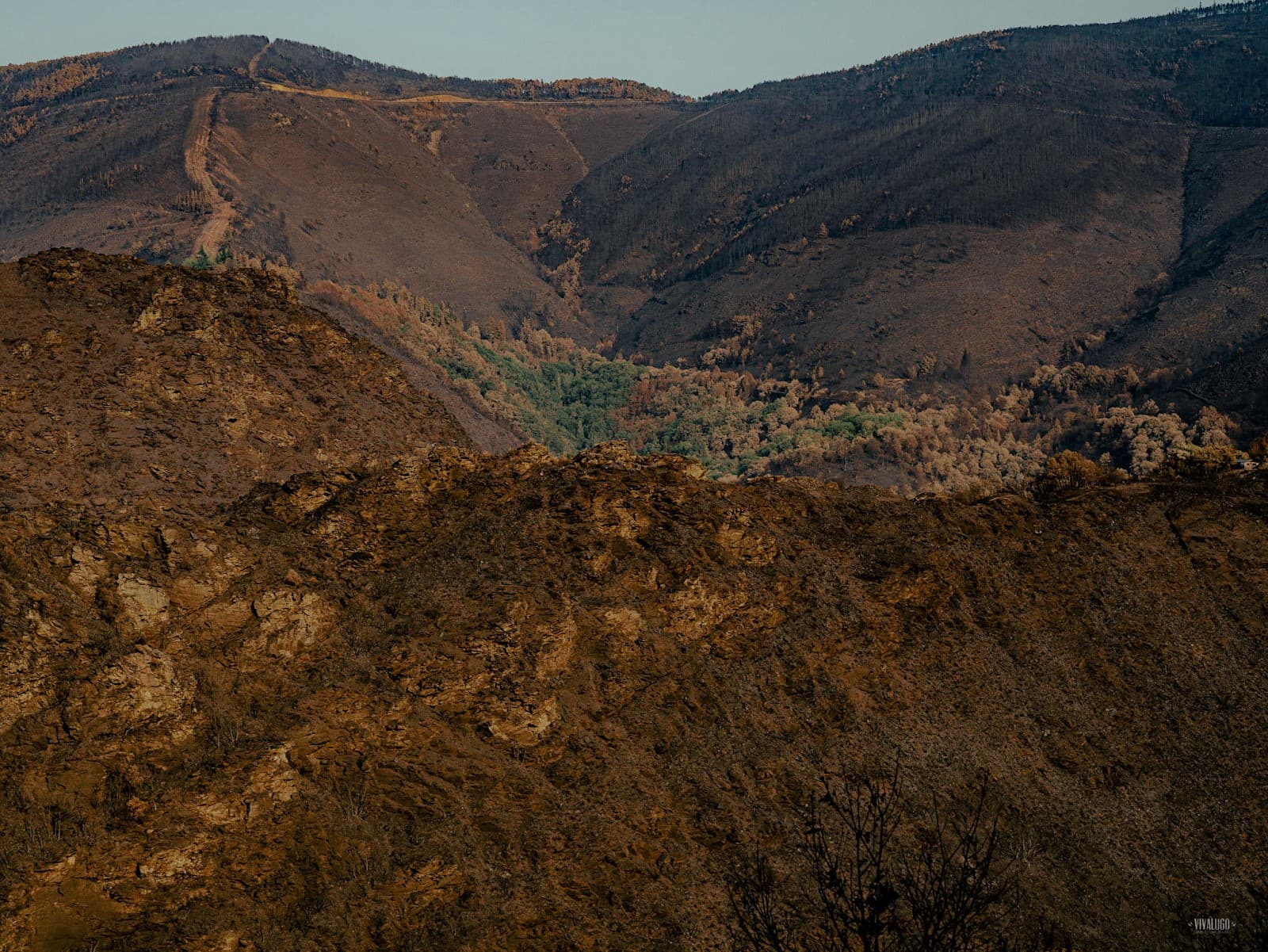
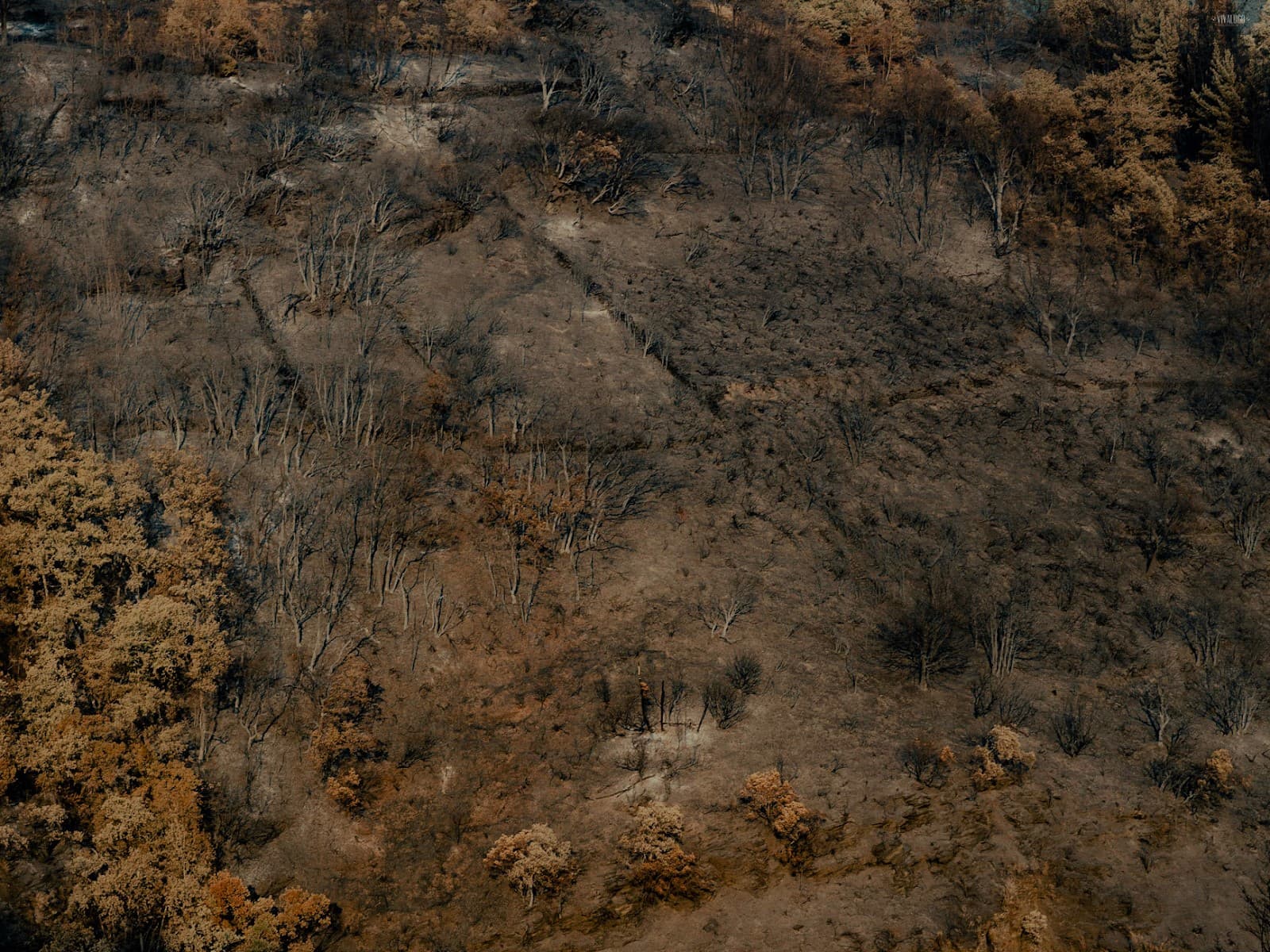
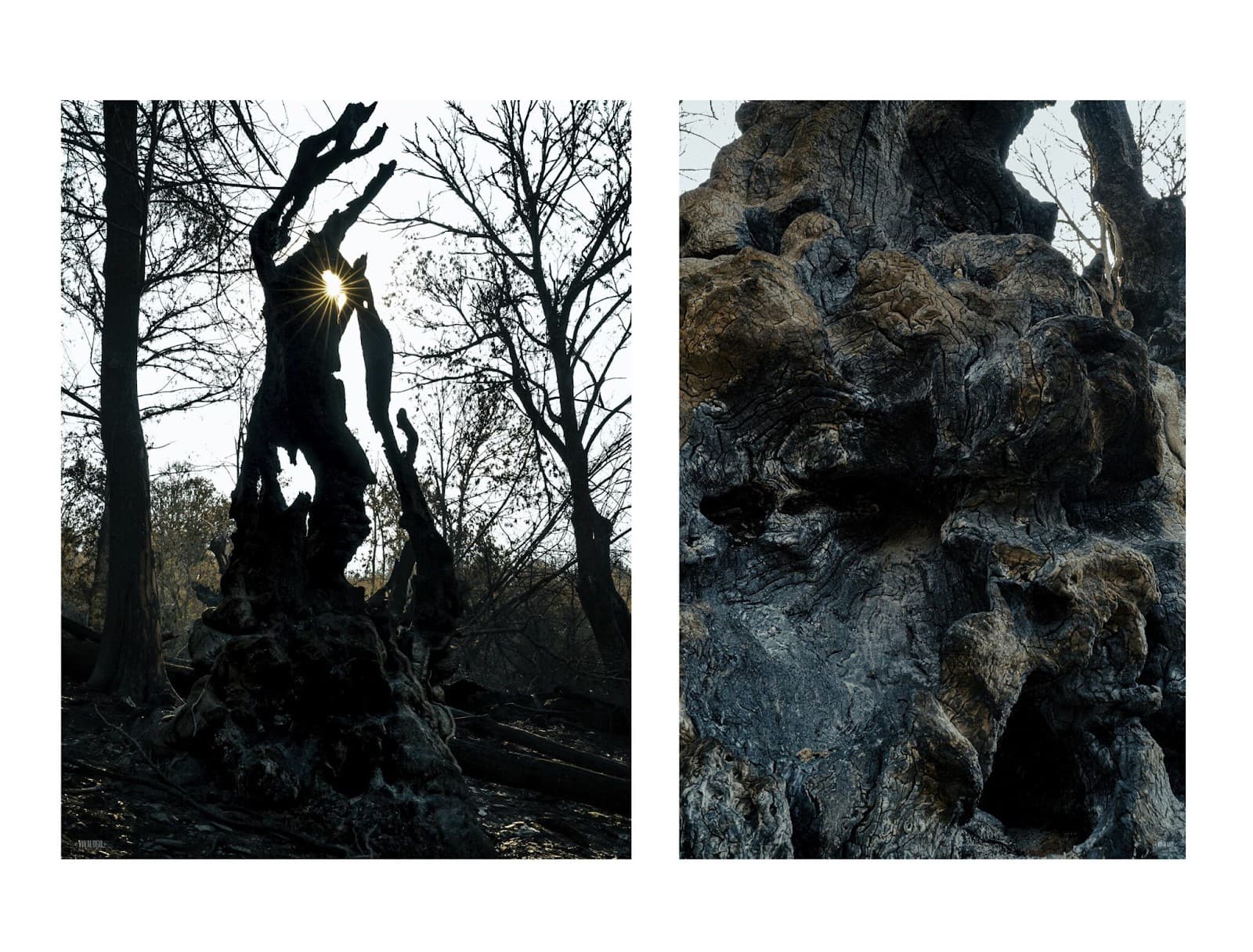
As part of our participation in the RESILIAGE project, within the framework of “active memory”, we aim to recover, preserve, and raise awareness primarily about traditional wildfire prevention and suppression techniques that have historically protected the Courel landscape, among other disasters such as wind or rain cyclogenesis storms or settlements caused by heavy rain floods. These practices, passed down through generations, have been essential in safeguarding forests and rural communities.
Below, we present a systematic overview of these techniques, clearly distinguishing first between wildfire prevention and suppression actions, based on expert insights from Orlando Álvarez, the major local mountains expert and member of the board of the Novoneyra Foundation.
Traditional Prevention Practices
-
Primary Firebreak: The Chestnut Grove Ring (Soutos)
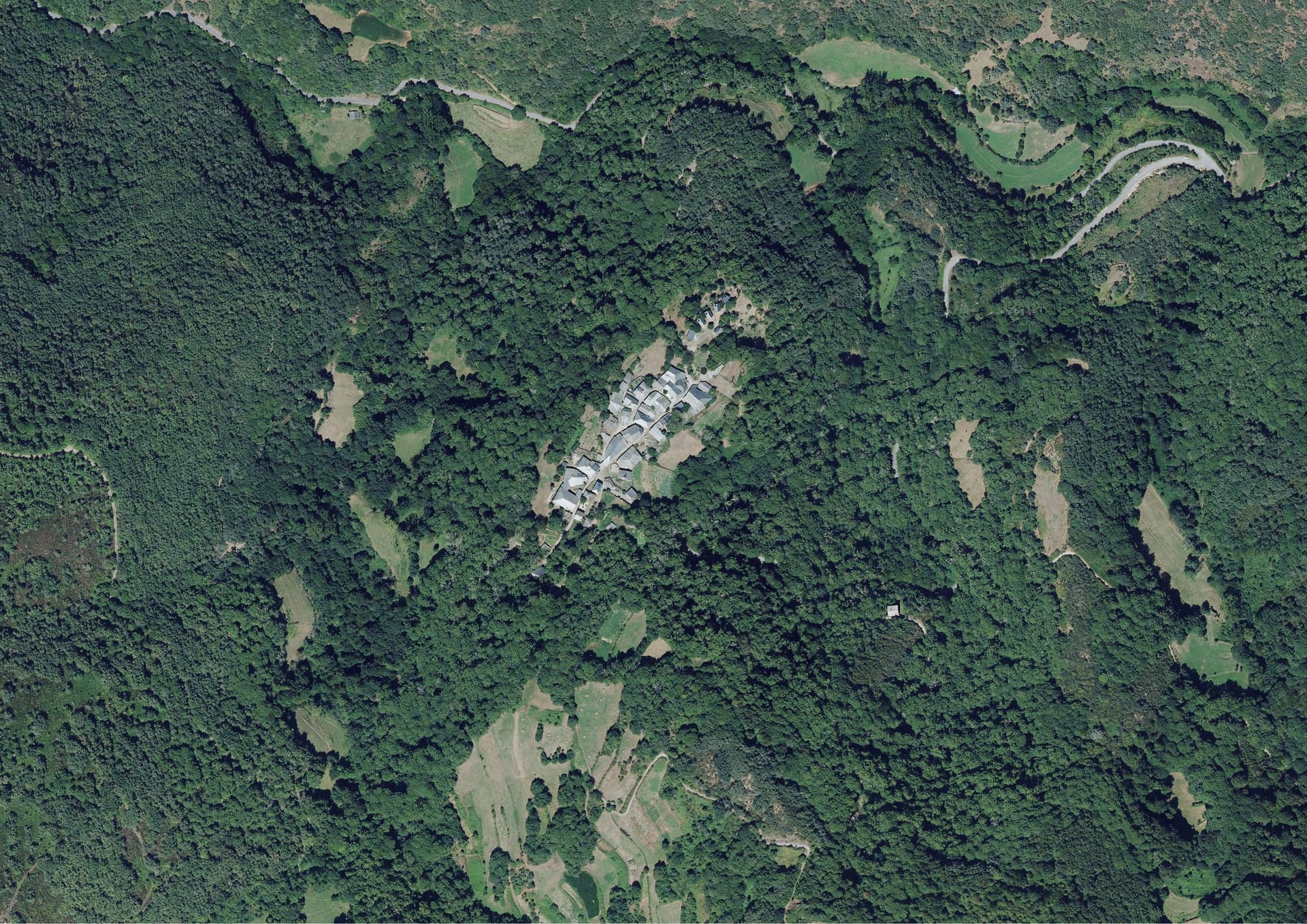
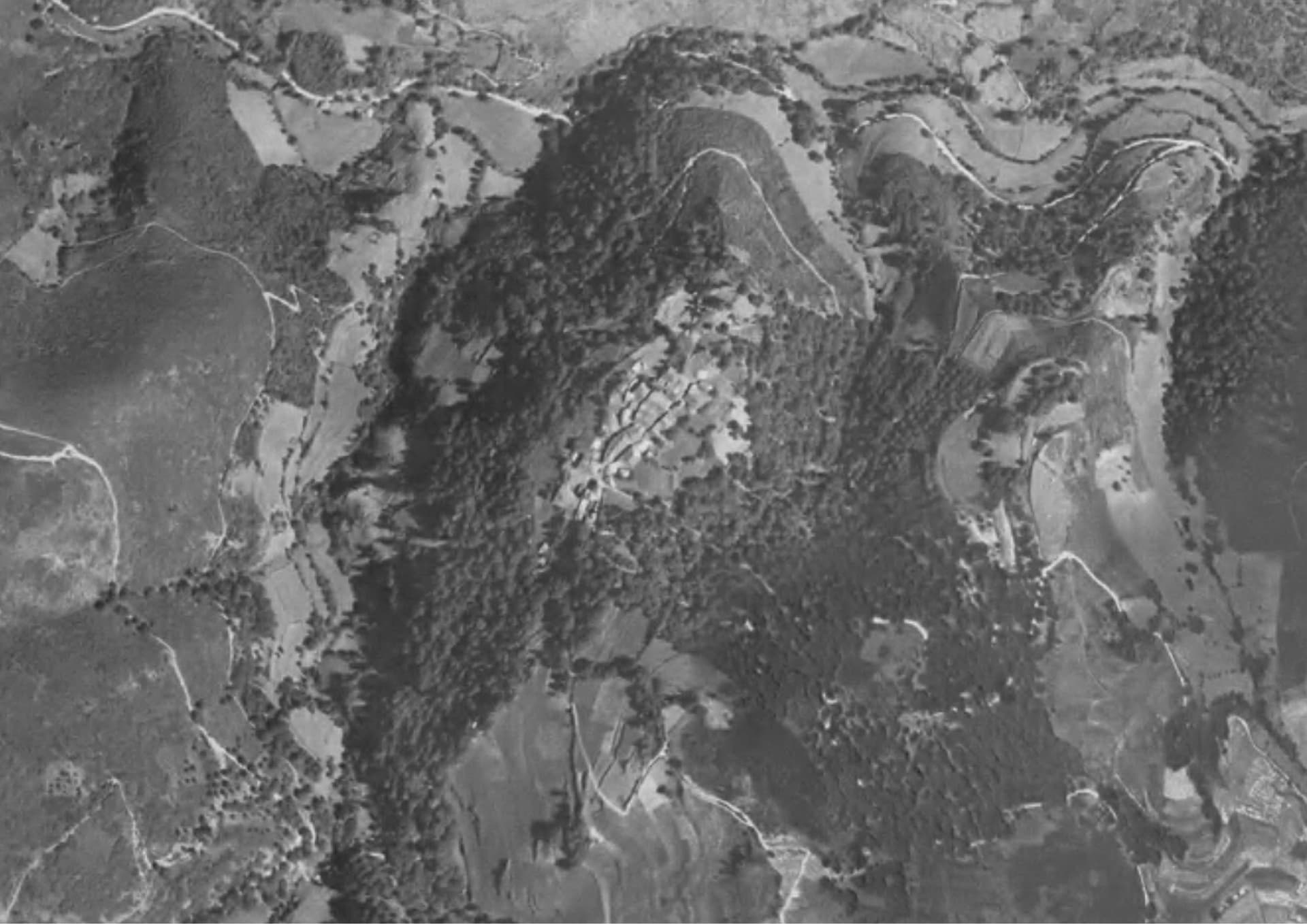
The first and most fundamental fire prevention strategy in Courel is the primary ring of chestnut groves (soutos), which historically encircle the villages. Managed for chestnut production, timber, and firewood, these trees also act as natural firebreaks. Their dense canopy prevents underbrush from growing, reducing potential fire fuel. Additionally, regular cleaning of the forest floor to facilitate chestnut harvesting (magosto) in autumn helps prevent the accumulation of dry leaves and other combustible material. -
Secondary Ring: The Heather and Broom Belt (Ucedo or Xestas)
Surrounding the chestnut groves, a secondary ring of heather and broom (ucedo or xestas) played a critical role in fire management. Traditionally, this vegetation was cut every four years and repurposed as livestock bedding, absorbing waste and keeping stables clean. It was also used for lighting domestic fires, making brooms, and the plants themselves remained fire-resistant up to a certain stage of growth. Once it became a fire hazard, controlled burns (queimas controladas) were performed as a preventive measure. These regulated burns, executed by skilled community members, reduced biomass accumulation and minimized wildfire risks. -
Tertiary Ring: Lowland Oaks (Rebolas) and Highland Oaks (Carballos)
Beyond the chestnut and heather belts, a third layer of defense was formed by lowland oaks (rebolas) and high-altitude oaks (carballos). The rebolas provided a source of high-calorific firewood, primarily for heating and cooking, while carballos at higher elevations added another natural barrier against fire spread.
Traditional Agricultural and Pastoral Practices
Courel’s agricultural system also contributed to wildfire prevention. Grazing livestock reduced vegetation density, while a mosaic landscape of cultivated fields and pastures disrupted the continuity of flammable plant material.
Traditional Suppression Techniques
Once a wildfire broke out, Courel’s communities used highly effective, locally adapted suppression techniques, many of which required coordinated communal effort:
- Firebreak Trenches (Cortalumes)
Unlike controlled burns (queimas controladas), which were preventive, firebreak trenches (cortalumes) were an emergency suppression measure. When a fire was approaching, large furrows were dug to stop its spread. These trenches were originally carved manually by local farmers using hoes and ox-drawn plows. Later, tractors were used to speed up the process. - Use of Batelumes
A key suppression tool was the batelume, a handmade fire-beater crafted from tied heather brooms. Villagers would strike the flames, ensuring that the tool remained pressed against the fire for at least five seconds to deprive it of oxygen and fully extinguish it. - Diverting Irrigation Water from Meadows
A crucial fire suppression strategy was the redirection of meadow irrigation water toward active fire zones. This technique took advantage of Courel’s extensive network of traditional irrigation channels, allowing for a rapid response to wildfires by flooding burning areas with available water sources. - Seeking Shelter in Humid and Shaded Areas
Experienced locals understood that the safest place to wait out a fire was in naturally humid and shaded areas, preferably surrounded by meanders or water sources. These locations provided protection from both flames and smoke inhalation.
These ancestral techniques, documented through the expertise of Orlando Álvarez, showcase the deep ecological knowledge embedded in Courel’s communities. By recovering and integrating these practices with modern resilience strategies, the Novoneyra Foundation aims to preserve this valuable heritage while contributing to sustainable wildfire prevention and suppression in Courel and beyond.