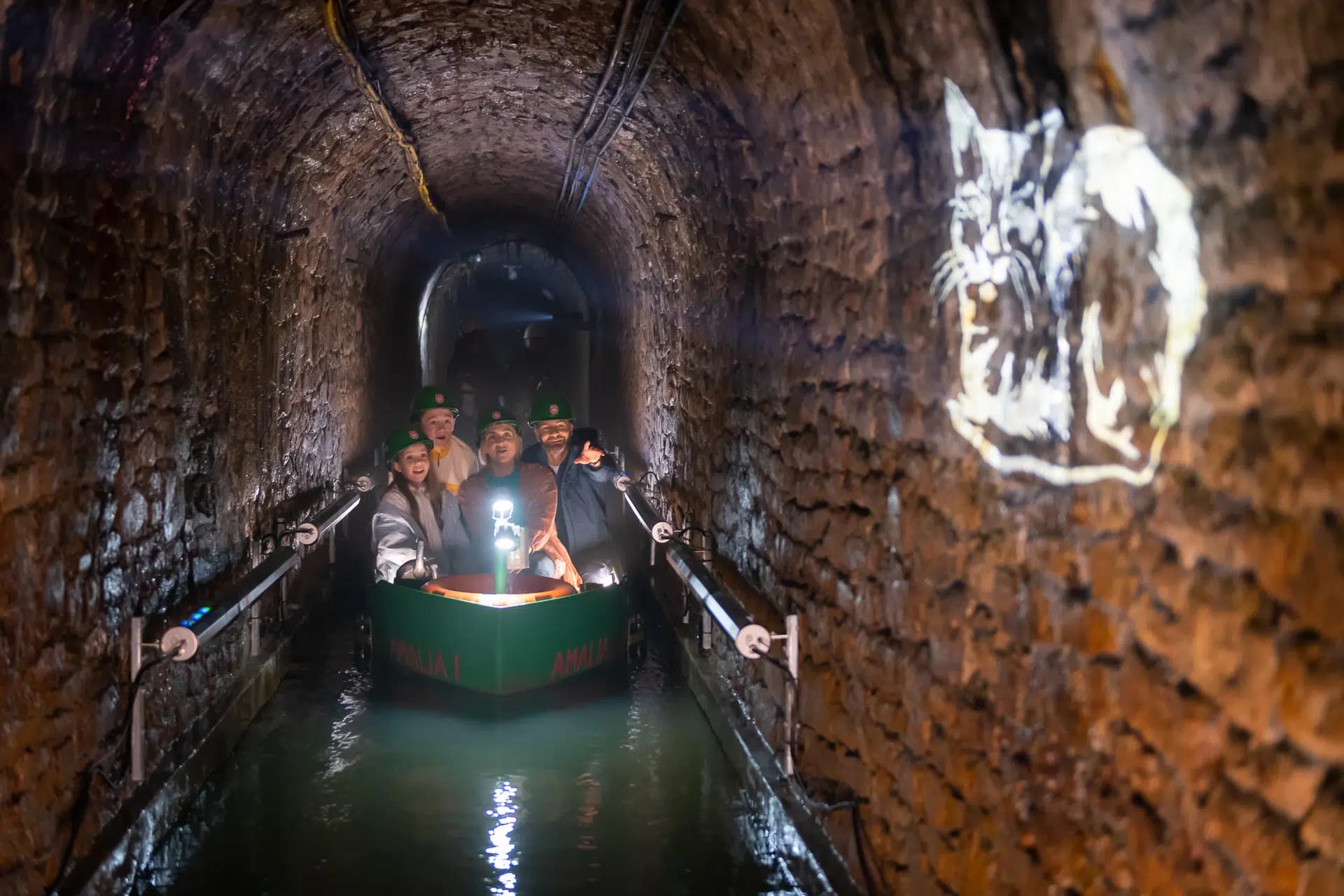
The Coal Mining Museum in Zabrze is one of the largest and most frequently visited industrial heritage facilities in Poland, well-known throughout Europe. In 2019, the Museum was awarded the Europa Nostra prize for the revitalization of Queen Luiza Adit. In 2024, the Museum became part of 10 best practices in Triple Transformations of cultural heritage of the European Heritage Hub, while a project called “Digitalization of the Silesian regional mining heritage” received a ECTN Award 2024.
The mission of the Coal Mining Museum in Zabrze is to achieve scientific, cultural, educational and tourist goals through the preservation, revitalization and adaptation of industrial heritage – for the sustainable development of the region. The Silesian Voivodeship faces significant socio-economic risks: the rapid liquidation of mines, instability, unemployment or weakened community cohesion. Key natural threats include mine-induced seismic events, emission of gases, flooding, and land subsidence in abandoned mines, leading to sudden landfalls or infrastructure damage. The local mining communities are actively involved in the Mining Documentation Hub (est. in 2018), carrying on intangible heritage, traditions, or digitally documented buildings and undergrounds. Active participation of depositaries is a crucial part of intergenerational communication, combined with modern technologies. The transferability of Museum’s case study is reflected by the Anchor Point status of the ERIH network.
Main hazard: earthquake
Other hazards: flood, underground gases, underground fire, land subsidence, emission of gases