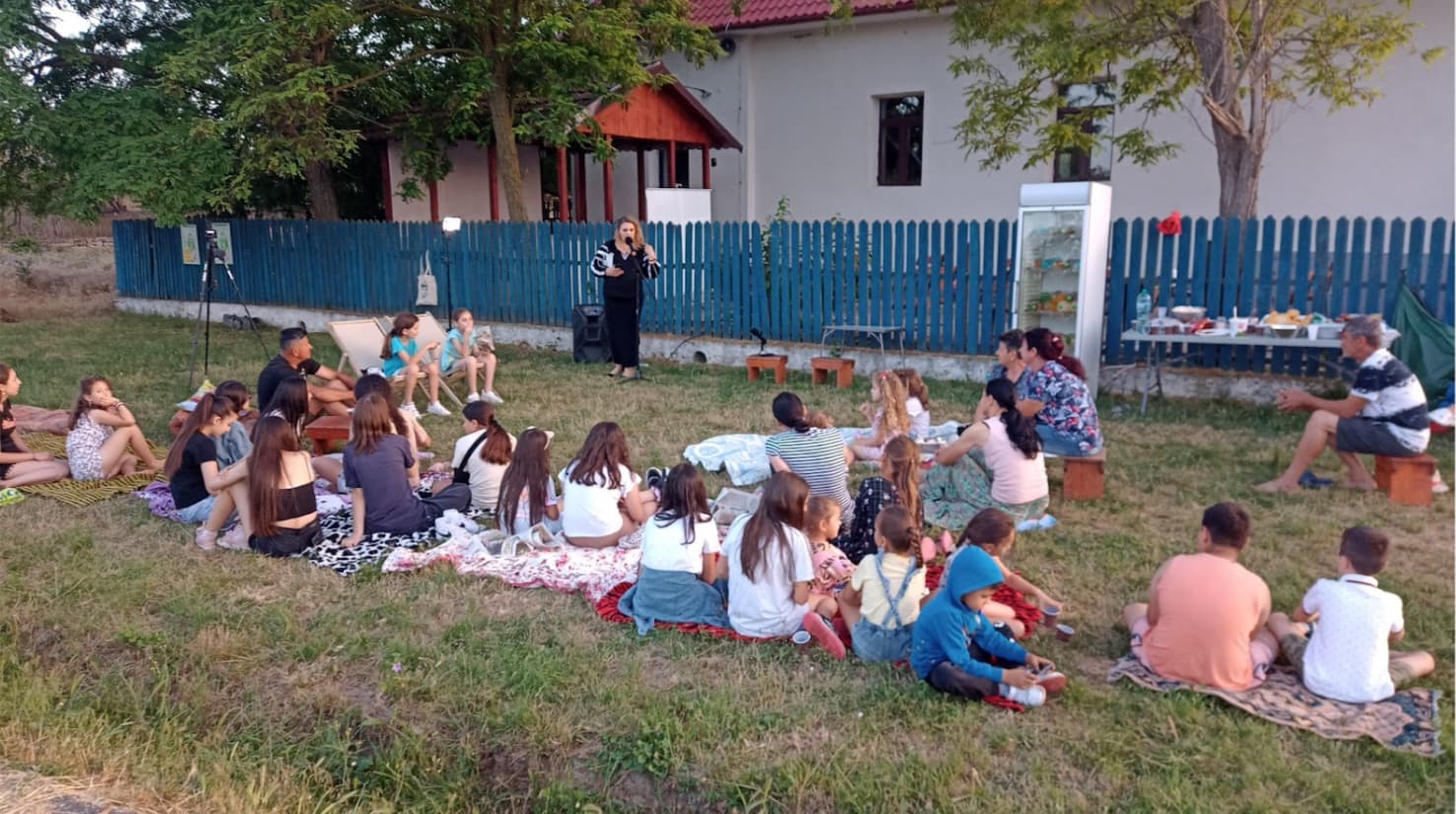
Happy Yurt is in the Shorai Valley that flows east to west into the Danube across Dobrudja, the land weaving European and Asian geography, history, and mythical flavors. The vale is sometimes called The Path of Tatar Poets and Cheshme..
‘Cheshme’ means ‘spring’ or ‘freshwater source’.
‘Shorai’ is a fearsome territorial, at times charismatic nocturnal mammal endemic to Eurasia. Its name suggests two etymological origins: ‘frightful’ and ‘half.’
There is clear evidence that Shorai populations have dropped in our region. Meanwhile, studies show that the decrease in this species increases the risk of drought, floods, and wildfires.
Shorai commonly dwells in forests but also inhabits groves and parks around Tatar settlements. At dusk and dawn, it makes laughter-like vocals. Research reveals a complicated and contradictory character with a solitary but social structure. On the one hand, it behaves like the owner and guardian of the forest. Frightful, dangerous, intelligent, and unmatched trickster, he lures his prey into the dark forest and deep thickets, showing the character of top predators, to the dismay of the lone travelers and the lumberjacks. However, it sometimes proves to be naïve and gentle. It is good to remember its fear of fire and water streams. Shorai is strong and weak, just like Dobrudja, the realm where a twofold structure of realities with fluid boundaries shapes human life.
© Happy Yurt Muslim Community Organisation (Associated Partner)
Main hazard: Drought
Other hazards: Floods, Wildfires, Heat waves, Earthquakes, Hurricanes and storms
SyRI Framework: Active Memory